
In short: the history of Freetown, Sierra Leone, begins with a failed 1787 settlement for London’s Black Poor and the founding of Freetown on 11 March 1792 by about 1,100 Black Loyalists from Nova Scotia, who gathered under the Cotton Tree. It became a British Crown Colony in 1808, the capital of British West Africa until 1874, and the capital of independent Sierra Leone in 1961. In 2024 it had about 1.35 million people.
Freetown is one of the few African capitals founded as a refuge. Its first settlers were people who had escaped or been freed from slavery in Britain, North America and the Caribbean, and later Africans freed from slave ships by the Royal Navy. Their descendants, the Krio, gave the city its language and much of its culture. This guide traces Freetown’s history from the villages that came before it to the modern capital. Sources are listed at the end.
Before Freetown
People lived around the Sierra Leone estuary long before Europeans arrived. The earliest known group was the Bullom; the Mane invaded in the 1540s and 1550s and set up chiefdoms, and Temne and Loko villages stood near the future city, according to the Wikipedia history of Freetown. In 1568 the English slave trader John Hawkins helped a Mane king destroy Bonga, a town of about 10,000 people in the area.
The name of the country is older still. In 1462 the Portuguese navigator Pedro de Sintra named the wooded hills Serra Leôa, “Lion Mountains,” Britannica records. By the 1650s British, French, Dutch and Danish companies traded along the coast, including in enslaved people.
The Province of Freedom, 1787
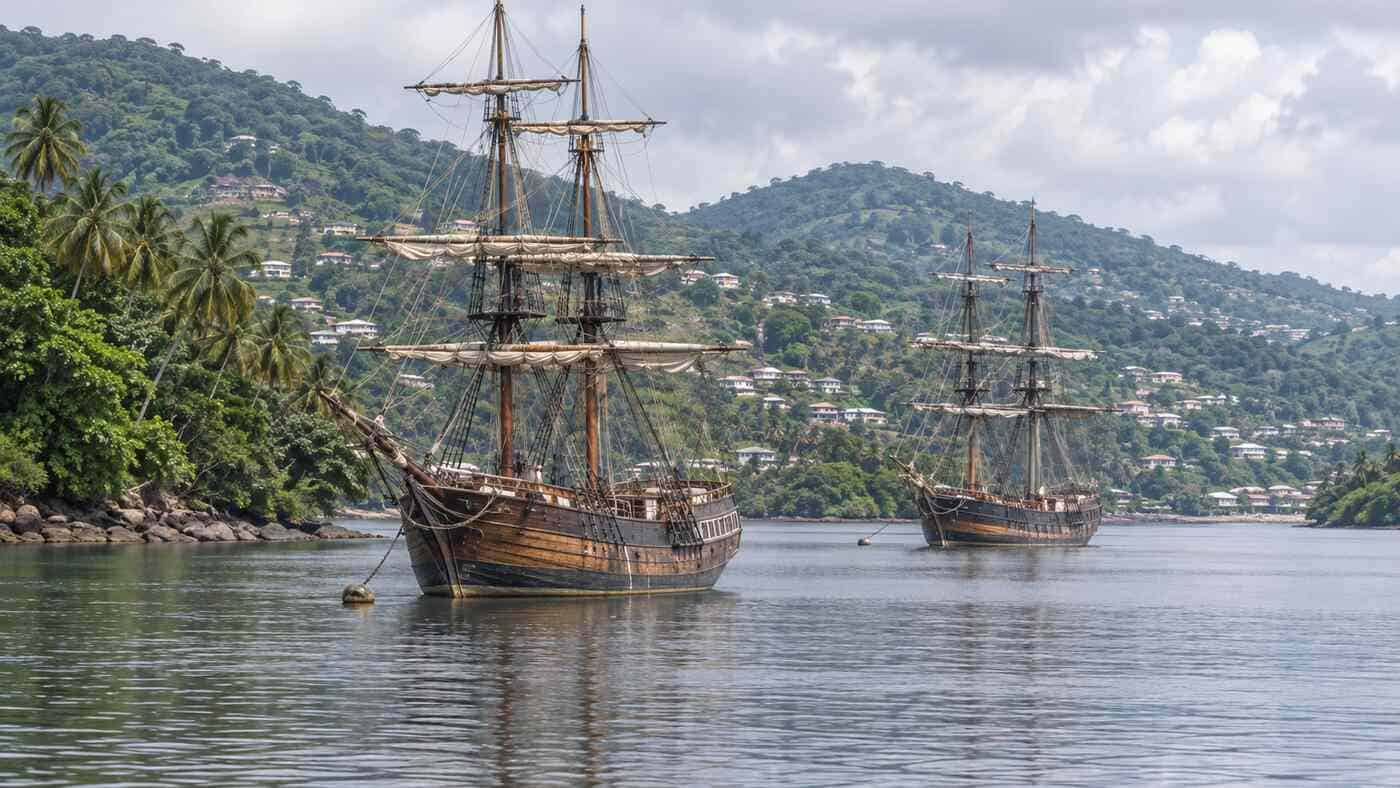
In 1787 the abolitionist Granville Sharp chose the site south of the river mouth as a haven for the Black Poor, free but destitute Black people in England. About 400 settlers sailed from London under the Committee for the Relief of the Black Poor. They founded the “Province of Freedom” and Granville Town on land bought from the Koya Temne subchief King Tom and the regent Naimbana.
The settlement struggled. King Tom’s successor, King Jimmy, burned Granville Town in 1789. In 1791 Alexander Falconbridge gathered the survivors and re-established it near what is now Cline Town and Fourah Bay. These “Old Settlers” were later absorbed into the new colony.
The Nova Scotian founding, 1792
The city itself was founded by a different group. During the American Revolutionary War, enslaved Africans who fought for Britain were promised freedom; after the war many were evacuated to Nova Scotia, where they received poor land and broken promises. In 1791 one of them, Thomas Peters, went to London to complain. The Sierra Leone Company sent Lieutenant John Clarkson to Nova Scotia to register volunteers.
More than 1,100 chose to go. They sailed in 15 ships and arrived between 26 February and 9 March 1792; 64 died on the way. On 11 March 1792 they founded Freetown on the site of the first Granville Town, and Clarkson became the colony’s first governor. The town was laid out on an American grid, with Water Street as its main road.
Why is the Cotton Tree important?
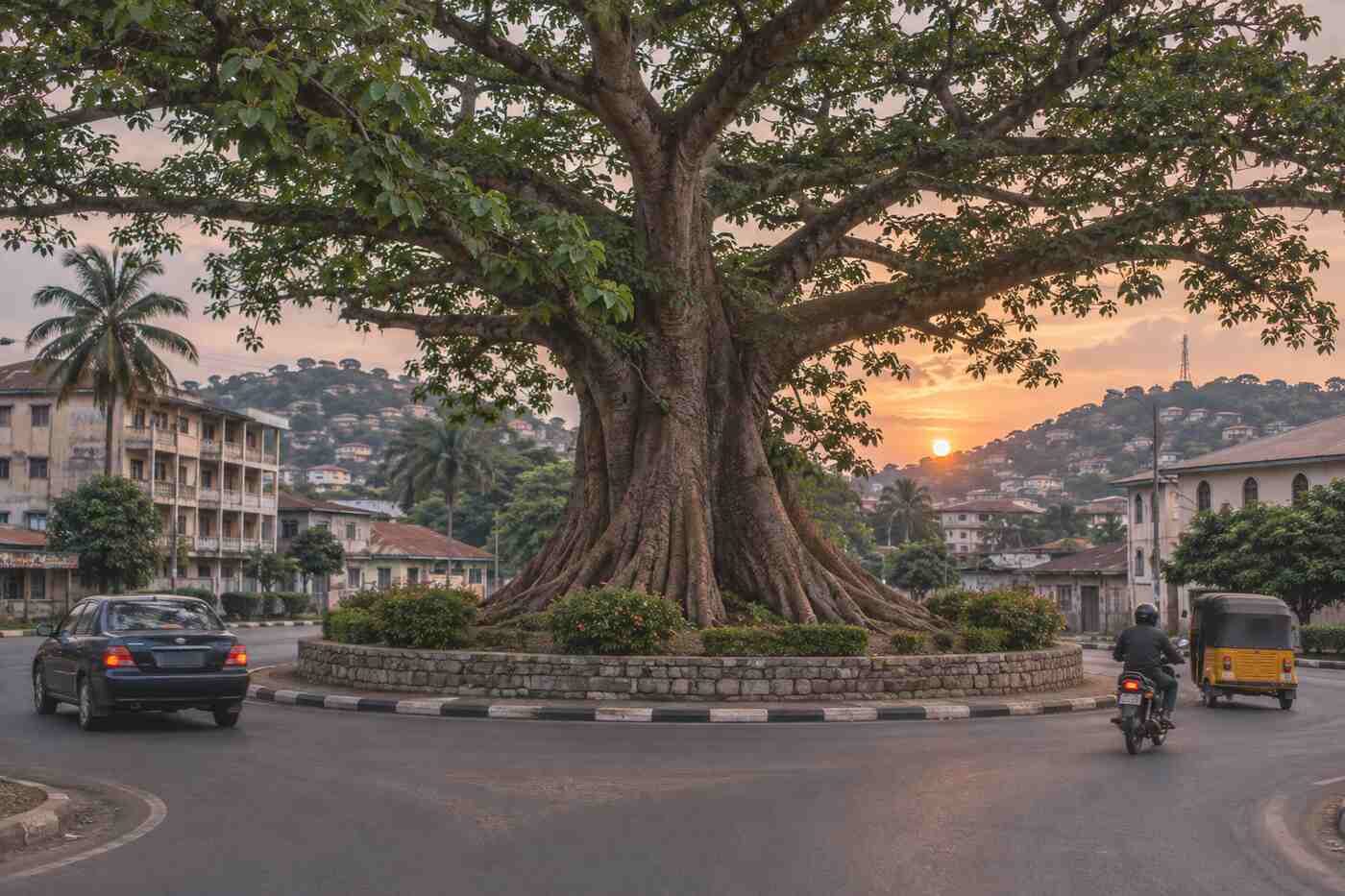
According to tradition, the new settlers gathered under a huge kapok tree in March 1792 to pray and give thanks, while Nathaniel Gilbert preached; the Baptist preacher David George held what is described as the first recorded Baptist service in Africa there. The Wikipedia entry on the Cotton Tree notes it was already mature, perhaps 400 years old, and that records of it go back to 1787.
The tree became the city’s symbol. It appeared on a 1933 stamp and on the first Sierra Leonean banknotes in 1964, and Queen Elizabeth II visited it after independence. It survived fires in 2018 and 2020, but on the night of 24 May 2023 much of it fell in heavy rain. President Julius Maada Bio called it “a physical embodiment of where we come from as a country.” Part of the trunk survived, and remains of the fallen part were taken to a museum.
Maroons, Liberated Africans and the Krio
The early colony was turbulent. The French pillaged it in 1794. Nova Scotian settlers complained about land and rule by the company, and in 1800 some rebelled; the authorities put down the revolt with the help of about 550 Jamaican Maroons who had just arrived, and later gave the Maroons their own district, Maroon Town. Temne forces attacked in 1801 and were driven off.
In 1808 Britain made Freetown a Crown Colony. From then until 1874 it was the capital of British West Africa and the Royal Navy’s base for suppressing the slave trade. Africans freed from captured slave ships were settled there too; Britannica notes that settlers were landed at King Jimmy’s Watering Place, now a market. The Black Poor, Nova Scotians, Maroons and Liberated Africans merged into the Krio, or Creole, people. Krio is still the city’s main language, spoken at home by more than 20 per cent of residents and as a common tongue by most others.
Freetown history timeline
| Year | Event |
|---|---|
| 1462 | Pedro de Sintra names the hills Serra Leôa |
| 1787 | Black Poor settlers found Granville Town |
| 1792 | Nova Scotian settlers found Freetown, 11 March |
| 1794 | French raid pillages the town |
| 1808 | Freetown becomes a British Crown Colony |
| 1827 | Fourah Bay College founded |
| 1893 | Incorporated as a municipality |
| 1961 | Capital of independent Sierra Leone |
| 1999 | January assault on the city during the civil war |
| 2017 | Regent mudslide kills more than 300 |
| 2023 | The Cotton Tree falls, 24 May |

The Athens of West Africa
Freetown became the education centre of the region. Fourah Bay College, founded in 1827 and now on Mount Aureol, is the oldest university in West Africa and joined the University of Sierra Leone in 1969. Freetown also had one of Africa’s earliest newspaper traditions; our history of newspapers in Sierra Leone covers it.
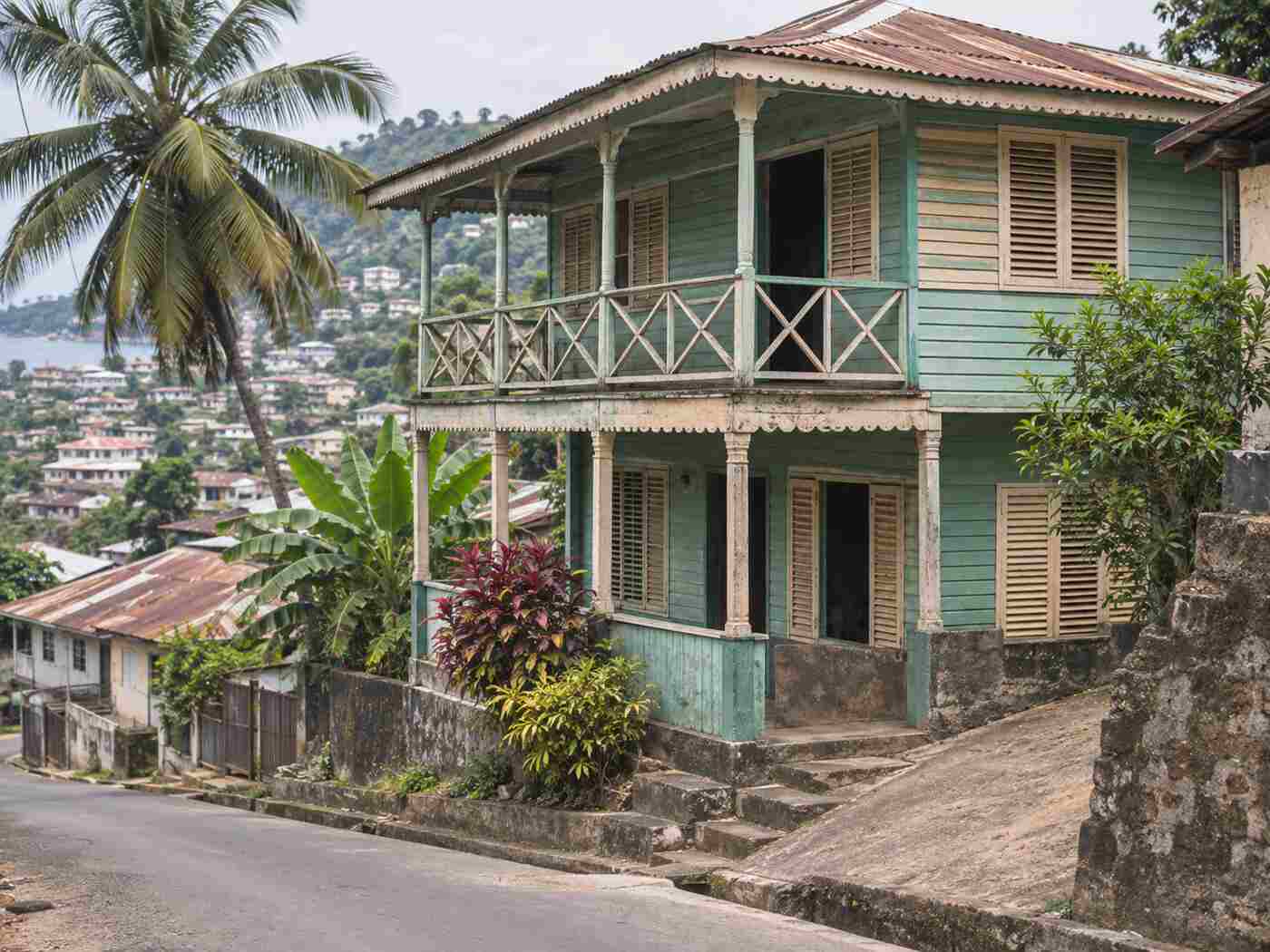
Several buildings survive from the colonial city. Fort Thornton, from 1796, is now State House. St George’s Cathedral dates from 1828 according to Wikipedia, while Britannica gives 1852. The National Museum occupied the former Cotton Tree telephone exchange. Freetown was incorporated as a municipality in 1893, and in both world wars its deep natural harbour served as a British naval base and convoy assembly point.
Independence, war and the modern city
Freetown became the capital of independent Sierra Leone in 1961. During the civil war it was fought over repeatedly: rebels and mutineers took it in May 1997, ECOMOG forces retook it in 1998, and the AFRC/RUF assault of January 1999 killed thousands. Our Sierra Leone civil war timeline sets out those events, and the Special Court for Sierra Leone sat in the city afterwards.
The city has grown fast since the war. Its population rose from 772,873 in 2004 to 1,055,964 in 2015 and 1,347,559 in the 2024 census. Disasters have tested it: the Regent mudslide of 14 August 2017 killed more than 300 people, and a fuel tanker explosion on 5 November 2021 killed at least 99. Mayor Yvonne Aki-Sawyerr, elected in 2018 and re-elected in 2022, appointed the city’s first heat officer, Eugenia Kargbo, in 2021.

Freetown culture today
No ethnic group makes up more than 27 per cent of the city. Krio is the shared language, with Themne second. Christmas street parades run through neighbourhoods for a month, the Tangays festival is usually held at the National Stadium in November, and the Lantan festival on the last day of Ramadan fills streets with lanterns up to 20 feet long. The Leone Stars play at the National Stadium, and most Premier League clubs are Freetown sides, though the recent champions Bo Rangers come from Bo.
Key takeaways
- Freetown was founded on 11 March 1792 by more than 1,100 Black Loyalists from Nova Scotia, after a failed 1787 settlement.
- The Cotton Tree was the city’s symbol from its founding until it fell on 24 May 2023.
- From 1808 to 1874 Freetown was the capital of British West Africa and a base against the slave trade.
- Settlers and Liberated Africans became the Krio, whose language is still the city’s common tongue.
- The city had 1.35 million people in the 2024 census.
Common questions
Who founded Freetown?
Freetown was founded on 11 March 1792 by more than 1,100 Black Loyalists, formerly enslaved Africans who had fought for Britain in the American Revolutionary War and been resettled in Nova Scotia. They were led by Lieutenant John Clarkson of the Sierra Leone Company, who became the first governor.
Why is it called Freetown?
The Sierra Leone Company’s directors ordered the settlement to be named “Free Town” in March 1792, because it was founded as a home for people freed from slavery. The earlier 1787 settlement had been called the Province of Freedom.
What happened to the Cotton Tree in Freetown?
Much of the Cotton Tree toppled in heavy rain on the night of 24 May 2023. Part of the trunk and a leafy section survived, and a March 2024 report found it still alive. Remains of the fallen part were taken to a museum on the president’s orders.
Who are the Krio people?
The descendants of Freetown’s founding groups: the Black Poor from London, the Nova Scotian settlers, Jamaican Maroons and Africans freed from slave ships. Their language, Krio, is the most widely spoken language in Freetown and a common language across Sierra Leone.
What is the population of Freetown?
The 2024 census recorded 1,347,559 people in the city and about 1.5 million in the metropolitan area, according to Wikipedia. That is up from 772,873 in 2004.
How we put this together: the narrative follows the Wikipedia history of Freetown and Britannica’s entry on the city, with the Cotton Tree from its Wikipedia entry. Where they disagree, as on the date of St George’s Cathedral, we give both. War-time events are summarised from our civil war timeline sources.